|
|
|
Table of Contents |
The Globe, January 8, 1898
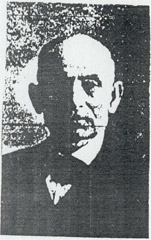
One of the veterans of the great lake trade is Capt. Alexander McBride, now clerk of the second and third division courts of the County of Elgin, his residence being at St. Thomas, Ont.. Several of his contemporary mariners speak of him as one of the best captains that used to go through the Welland Canal at the time of the old wooden locks. Captain McBride writes to The Globe: "I am very much pleased with your record of some of the captains of the great lakes, as it brings back to my memory the vessels and captains I used to know." Recently Dr. McCrimmon of St. Thomas was in Scotland, and there he met Capt. James Gibson, of Corqdol, Scurin, Rousay, on the Orkney Islands, a gentleman who for many years sailed the great Canadian lakes. During their conversation Capt. Gibson mentions Capt. McBride of St. Thomas, and asked the doctor if he was acquainted with that worthy navigator. Dr. McCrimmon having answered in the affirmative: "I saw that Captain save a man's life in the bravest manner I ever witnessed." said Captain Gibson. "I happened to be in Hamilton that morning," he said, "having come up from Kingston as a passenger on the steamer Sovereign the night before. I left my berth early, about 4 o'clock in the morning and was standing on the wharf when three gentlemen came down the pier. One of them said that he intended to have a bathe, disrobed and dived into the water. He did not come to the surface again and the cry was raised that a man was drowning. Capt. McBride at the time was asleep in his cabin aboard the vessel, which was also lying at the wharf, and the uproar awoke him. Without a moment's delay he sprang from his bed onto the wharf and then into the water to rescue the unfortunate bather. Being a good swimmer and diver, Capt. McBride searched the bottom some time, being eventually compelled to return to the surface without the man. Waiting merely a second to take breath Capt. McBride again dived and presently brought up the apparently lifeless body. The man had been in the water over five minutes. Strong and lithe, Capt. McBride instantly set to work to revive the sufferer. Laying the man on his stomach he rolled him and worked his lungs perseveringly, but he seemed past recovery until Capt. McBride placed his own mouth over that of the unconscious man and forced breath into his body. One of the arms moved slightly at first, and finally the man recovered." At another time Capt. McBride saved the life of a boy at Port Burwell, destroying a suit of new clothes in the performance of the gallant deed. Capt. McBride was also the means of saving several lives out of the fatal wreck of the Grand Trunk train at the Desjardins Canal on March 12, 1857. Capt. McBride himself was one of the saved. Speaking of the disaster recently he said, "There were two passenger cars. The engine and tender went down first, then the first passenger car. This car turned a complete summersault. Only the bottom of the car was out of the water. Of course all the people inside were drowned. The hindermost car stood on end with the forward end against the rear of the first car. and in the water. The other end was leaning against the abutments of the bridge. That was the car I was in. When it struck the bottom, the contents - seats, stoves and people - were hurled into the lower end. Those people underneath were crushed to death. I happened to be near the top of the pile, particularly my head, which was near the roof of the car. Willing hands went quickly to work. Men used the bottom of the first car as a platform upon which to stand whilst rescuing those in the car on end. One man had an axe, and he struck a hole into the roof of the upended car. When the axe went through a voice from the inside yelled, "Don't strike there again or the axe will go into my head". That one blow split a sliver off the edge of one of the boards right opposite and close to my eye. Through the opening I saw the man with the axe and others. They seemed so confused that they did not know what to do first. They were afraid to use the axe after they heard the voice from the inside. Removal of the sliver allowed allowed a man's fingers to catch the edge of the split board, so I yelled to them to pull the board off. They wrenched away one piece, so that they could see where to strike with the axe. They made a hole finally large enough to pull us through, the dead and the living. After the rescuers had removed several people and much debris off my chest they endeavored to extricate me. Two men took hold, but they could not move me. I said, "Let two more men take hold; I am strong and not hurt." Then at my instruction, four men tried, yet they could not move me. If my head had been where my legs were it is not likely I would have lived." Capt. McBride has been a subscriber to The Globe ever since its beginning. He was appointed to his present position some years ago, after having abandoned his pursuit of a living upon the great lakes.
Previous Next Return to Home Port The entire file of the Globe and Mail and its predecessors is now online via subscription at Micromedia ProQuest |